.png)
Talent Density and the High Performance Culture That Lasts

Talent Density Is Everywhere. Here Is How to Build a High Performance Culture Without Breaking Your People.
"About one-quarter of the workforce is at least 20% less productive than average," according to Gartner's outlook on talent management trends for 2026, which also warns that most organizations are "remarkably tolerant" of low performance. Executives have heard the message. In early 2025, Meta cut 3,600 people it described as its "lowest performers," and several of those let go publicly disputed the label, including one who said she had received an "exceeds expectations" rating. At Microsoft, low-rated employees were offered a choice between 16 weeks of pay or a performance improvement plan.
The idea behind all of this has a name: talent density. Popularized by Netflix, it is now one of the most discussed concepts in organizational performance. It is also one of the least clearly defined. Every organization talks about hiring great people. Far fewer have a clear, shared definition of what "great" actually means, or systems that support it once someone is in the door. For HR and People leaders, that gap is where a high performance culture is either built or quietly eroded.
The Problem Is Not High Standards. It Is How They Get Defined.
Nobody in HR is arguing against performance. HRZone's coverage of McKinsey's State of Organizations 2026 report found that 43% of executives cite productivity as their top priority this year, and 61% feel high pressure to deliver gains. The same research shows how hard it is to get right: 75% of organizations are struggling to build high-performance cultures, and fewer than a quarter achieve lasting impact.
The barriers McKinsey identified are telling. Limited career progression was the most cited obstacle (47%), followed by a lack of targeted incentives (43%), disengaged employees (38%), and rigid performance management systems (38%). None of those problems is solved by cutting the bottom of a list. They are design problems in the employee experience strategy itself.
There is also a clear warning about pressure. In McKinsey's findings, as reported by HRZone, leaders in high-pressure organizations were more likely to report reduced employee commitment (23%) than those in lower-pressure organizations (14%). Push output without investing in people, and performance tends to slide rather than climb.
Why the "Dot Model" Falls Short
One of the simplest ways talent density gets explained is as a page of dots. Filled dots are A players. Empty dots are everyone else. The goal is to fill the dots and clear out the empties. It is tidy, easy to draw on a whiteboard, and easy to put on a slide.
The trouble is what the dots cannot see. A single dot judges one person in isolation and sorts them into a keep pile or a cut pile. It says nothing about potential, about the teammate who makes everyone around them better, or about the high producer whose behavior drags a team down. And if the whole game becomes removing the bottom, there is always a new bottom. The bar keeps rising until the standard is no longer attainable, and the people who remain respond the way anyone would: they go quiet, stop raising issues, and burn out.
That burnout risk is not theoretical. Gallup's State of the Global Workplace 2026 report found that global employee engagement fell to 20% in 2025, its lowest level since 2020, at an estimated cost of $10 trillion in lost productivity. The sharpest decline was among managers, whose engagement dropped from 31% in 2022 to 22% in 2025. These are the same people being asked to sort their teams into dots.
What a Healthier Approach to Talent Density Looks Like
Define "great" for your culture before you measure it
A strong company culture strategy starts with a shared baseline. High performance can mean doing a specific job exceptionally well, not climbing the ladder. An individual contributor who has no interest in management but can handle any situation you give them is not a B player in any meaningful sense. Competency frameworks that look at people holistically give employees clarity on where they stand today and how to grow.
Rate people, do not rank them
Ranking forces colleagues against each other and cuts a fixed share from the bottom, whatever the team's actual performance. Rating measures each person against a clear standard and can include cultural impact alongside output. The distinction matters for collaboration, and it matters for trust.
Build the model with managers, not for them
Manager effectiveness depends on buy-in. When HR hands managers a finished framework and a deadline, problems that managers would have spotted immediately go unaddressed until they reach employees. Co-designing the rubric, and agreeing on the outcome it is meant to drive, is where HR leadership skills show up most. Gallup's data reinforces the stakes: within best-practice organizations, 79% of managers are engaged, nearly four times the global average.
Make the rating the start of a conversation
Measurement is the easy part. The real question is what happens next. A rating can trigger a round of performance improvement plans, or it can open a conversation about coaching, mentorship, stretch projects, rewards, fit, or whether someone simply needs a different manager. Gartner's own guidance points to reinventing performance improvement plans with clear development goals and timelines, and it notes that most managers have not been formally trained on using AI in performance management, a gap worth closing before AI in HR becomes part of the rating process.
Be explicit about what top performers get
If an organization asks for above-and-beyond effort, people will ask what they receive in return. Vague promises do not work as employee retention strategies. Gartner expects regrettable retention to emerge as the primary productivity barrier, and McKinsey found that only 20% of leaders believe non-financial rewards meaningfully boost performance, a sign many organizations are underinvesting in development, flexibility, and purpose.
Forgive imperfection, not dysfunction
Healthy cultures treat a one-time mistake differently from repeated, systemic problems. Toxic environments tend to do the opposite: they micromanage small errors while ignoring the dysfunction that is far more expensive. A high performance culture needs people who feel safe to fail out loud.
These are the kinds of questions People leaders work through together in Achieve Leadership Network mastermind sessions, where peers compare what is actually working inside their organizations rather than what looks good on a slide.
What This Looked Like in the Room
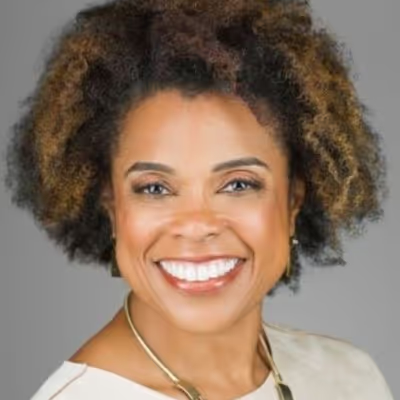
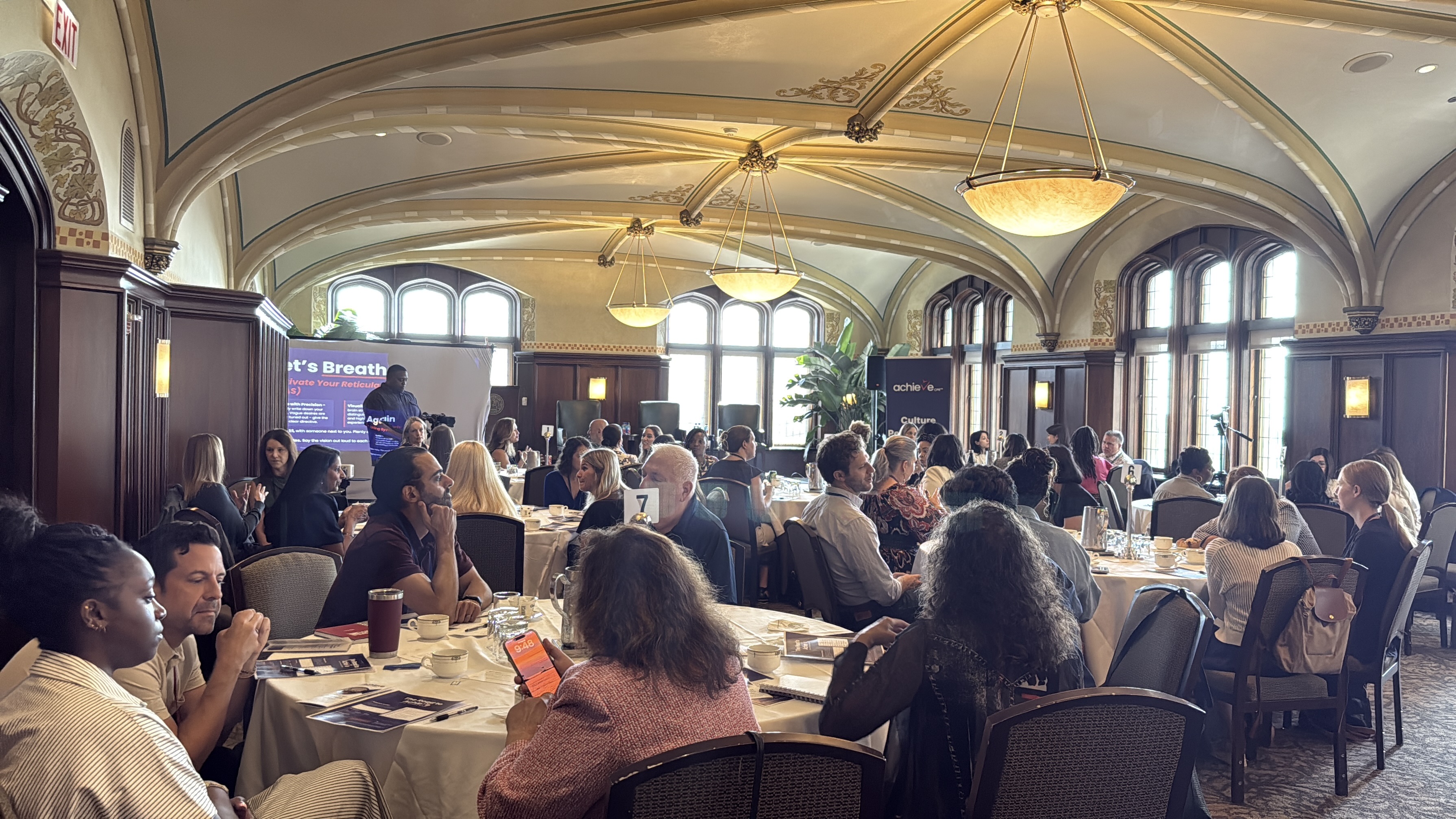
This article draws on a recent Achieve Leadership Network mastermind, "Talent Density Mastermind," hosted by Carly Keydel, Chief of Staff. Carly opened with a firsthand story: the moment a talent density framework was introduced to her team of engineering and product managers at a hyper-growth company, drawn as a page of dots. Her reaction was blunt: "Woof, this is very oversimplified."
From there, HR and People leaders from across industries pressure-tested the concept. The group explored the difference between ranking and rating systems, how a healthcare organization uses competency frameworks instead of a single dot, why "amazing B players" are often the people organizations least want to lose, and a memorable framework from Statistics 101 for separating forgivable mistakes from real dysfunction. The discussion closed on a question every organization adopting talent density will have to answer: once you have measured your people, what is your response?
Carly's view was not that talent density should be rejected. It was that leaders should not simply accept the definition they are handed. As she put it, the work is to think about the people aspect and where people want to go in their careers, "and not just looking at it from a cold standpoint."
Shape the Definition Before It Shapes You
Talent density is moving into more organizations every quarter, and People leaders have a narrow window to influence what it means inside their own. The research points in one direction. Per McKinsey Global Institute's Performance Through People research, cited in HRZone's report, organizations that give equal weight to people and performance are more than four times more likely than the average company to maintain top-tier financial performance. A high performance culture and a people-first culture are not competing goals. They are the same goal, measured honestly.
If you are working through how to define performance, support your managers, or build retention strategies that hold up under pressure, you do not have to do it alone. Achieve Leadership Network, brings together HR and People leaders, from Chief People Officers to emerging leaders, for candid peer conversations, masterminds, and HR events built around the challenges you are facing right now.
Join the Achieve Leadership Network, HR community to get access to sessions like this one and connect with peers who are shaping the future of work.