Human Leadership: Leading Others Without Burning Yourself Out

People Leadership Starts With You: Why the Best Leaders Refuse to Abandon Themselves
Being a manager used to come with a built-in boost. Not anymore. Gallup’s State of the Global Workplace: 2026 report found that manager engagement fell to 22% in 2025, down nine points since 2022, with five of those points lost in a single year. Gallup’s conclusion is blunt: managers are increasingly only as engaged as the people they lead.
The people who support those managers are stretched too. In Lattice’s 2027 State of People Strategy Report, a survey of 1,358 HR professionals, 55% said they had considered leaving the profession in the past year, and 39% of them pointed to feeling undervalued. That’s the quiet crisis in people leadership right now. The leaders who give the most are running out.
At Achieve, we don’t think the answer is to give less. We think it’s to stop leaving yourself out of the equation. That was the heart of our recent fireside chat with Kristen Hadeed, author of Permission to Screw Up and the new book Human Leadership: The Courage to Face Ourselves and Each Other.
The hidden cost of people-first leadership
Kristen started a cleaning company in college and built Student Maid into a business known around the world for its culture. Around her 30th birthday, she caught her reflection in her apartment window late one night and didn’t recognize the person looking back. From the outside, everything looked like success. Inside, she had fallen out of love with her company, was carrying every hard problem alone, and was buried in debt.
Her diagnosis was simple and uncomfortable: she had focused so much on leading other people that she had never learned to lead herself. She had abandoned herself and called it leadership.
The research suggests she’s far from alone. The HR Mental Wellbeing Report 2026 from Ultimate Resilience and Everywhen, based on 1,447 UK HR professionals, found that burnout is “very likely” for 62% of respondents, while only 13% feel their own mental wellbeing is well supported at work. And SHRM’s 2026 State of the Workplace research found that HR professionals and executives ranked managers’ ability to effectively lead their direct reports as the single most pressing workplace need, with employee stress and burnout close behind.
Put those findings side by side and a pattern emerges: people leaders are asked to fix engagement, burnout and manager effectiveness for everyone else, with no one doing the same for them.
HR leadership skills start with self-leadership
One of the most useful ideas from the session is the limiting belief exercise Kristen worked through with her first coach. Limiting beliefs are stories we form growing up. They protect us and give us real strengths, but when we can’t see them, they also hold us back.
Kristen’s was clear: it’s my job to keep people happy. It came from being the family peacemaker as a child. It gave her deep empathy. It also meant avoiding hard conversations, holding back feedback, and becoming what she calls the “leadership team translator,” stepping into colleagues’ conflicts in ways that actually robbed them of the chance to build trust with each other.
If you work in HR, that may sound familiar. Host Zech Dahms, President of Achieve, said it plainly during the session: people leaders tend to be people pleasers. The instinct comes from a good place, but it can shortchange your own needs and keep others from growing on their own.
“We can’t be human alone. We need other people.”Kristen Hadeed
That’s why getting outside perspective matters so much. Kristen’s first step was searching online for a coach, because shame made a stranger feel safer than anyone she knew. For many people leaders, the safe space looks like a peer community: other HR and people leaders who have faced the same pressures and can say “me too.” It’s the reason the Achieve Leadership Network exists, so no people leader has to work through these moments alone.
Accountability is kind, and it builds a high performance culture
Kristen admits she used to lead like a cheerleader. High fives when the team hit the goal, high fives when it didn’t. No clear owners, no visible numbers. Her turning point came watching a CEO mentor hold his team to a level of accountability she had never seen, while staying kind and encouraging the whole time. By the end of that day, his team was telling him how wonderful it was.
“Accountability is kind. Clarity is kind.”Kristen Hadeed
The data backs her up. Gallup’s January 2026 analysis, U.S. Employee Engagement Declines From 2020 Peak, found that clarity about what’s expected at work showed one of the two largest declines of any engagement item since 2020, down nine points. Fewer than a third of leaders strongly agree they have a clear definition of exceptional performance for their role. Yet managers and individual contributors who do have that clarity are nearly four times as likely to be engaged.
In other words, the hard conversation you keep postponing may be the kindest thing you can offer. As Kristen put it, people usually already know when they’re falling short. Naming it, with care, relieves them of carrying that weight alone. She also stressed partnering with people whose strengths balance yours. Her right hand, Monique, brings the question Kristen tends to skip: how do we take care of the team in a way we can sustain?
Values as a compass for manager effectiveness
Even someone who teaches courageous conversations doesn’t always want to have them. Kristen was candid about her stomach twisting in knots and searching for reasons to wait one more day. What gets her through is a short list of personal values: courage and compassion. Courage tells her to have the conversation now. Compassion shapes how she has it.
Zech recalled advice she once gave his mastermind group during a season of upheaval: when everything is changing, your values are your unchangeables. That matters more than ever for manager effectiveness. Gartner research published in 2025 found that 75% of CHROs believe their managers are overwhelmed by increased job responsibilities. When the job keeps expanding, values are what keep leaders steady.
When the conversation turned to AI, Kristen drew a clear line. AI can’t do any of this. Facing ourselves and each other is human work.
Breaking the taboo: transparency as a retention strategy
The most striking story from the session was about money. After Kristen moved into speaking and leadership development, she kept putting her own growth last, working more hours than ever with no path for herself in the company she built. With Monique’s push, she raised her own compensation with the team. Together they landed on a shared principle: when the business wins, every person on the team wins. Today the company operates with complete financial transparency.
That story lands at a timely moment. The EU Pay Transparency Directive’s transposition deadline passed on 7 June 2026, and according to law firm Lewis Silkin, most member states had not yet completed implementation, while the European Commission has ruled out any extension. Transparency is moving from a culture choice to an expectation.
Kristen’s caveat is the part leaders should hold onto. Her team didn’t start there. It took many trust-building conversations before that one was possible. The lesson for employee retention strategies is bigger than pay: the conversations you think you can’t possibly have are often where the most power is.
What this looked like in the room
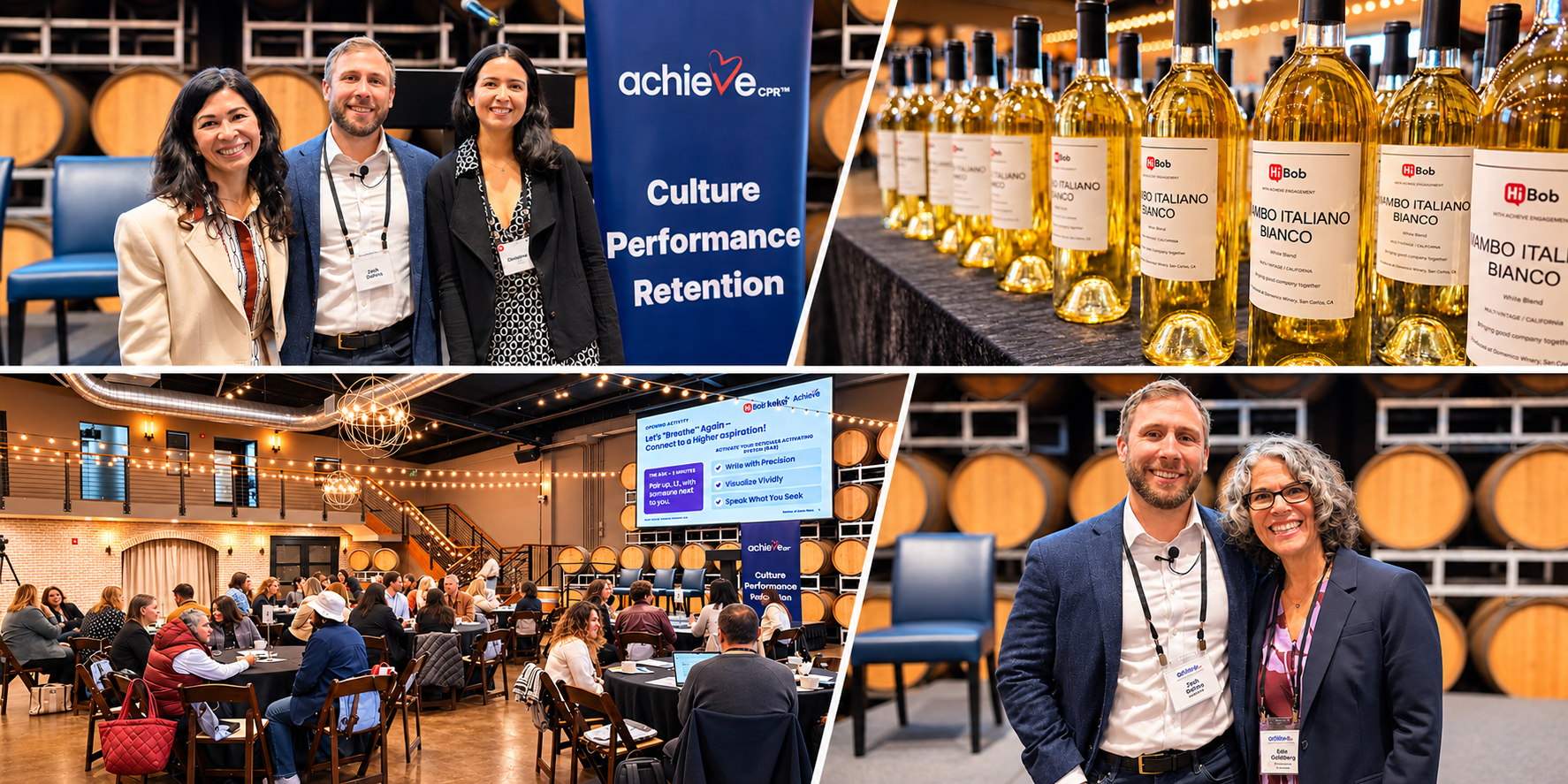
This conversation was part of Achieve’s free webcast programming, hosted by Zech Dahms, who has known Kristen for years as a friend, coach and mentor. The chat became a conversation of its own as attendees shared what they were avoiding and asked what to do when others don’t support their growth.
Zech and Kristen walked through the first parts of the book’s four-part journey (Avoiding, Facing, Courage and Human), with real stories behind each exercise: the limiting belief work, values as a compass, and the taboo conversations that changed her team. Kristen also pointed attendees to free companion resources, including values and limiting belief guides, a leadership assessment and a discussion guide, at kristenhadeed.com/humanleadershipbook. The full recording and member recap live inside the Achieve Leadership Network.
What this means for people leaders
Across Achieve’s achieveCPR framework of Culture, Performance and Retention, the same thread keeps showing up. Culture suffers when leaders hide what they’re carrying. Performance suffers when kindness gets confused with avoiding accountability. Retention suffers when the people holding everything together quietly burn out and leave.
The most human way to lead isn’t to disappear into everyone else’s needs. It’s to face yourself honestly, name the beliefs that drive you, lean on your values when it gets hard, and trust the people around you enough to have the real conversation. That’s not a soft skill. It’s the foundation every other leadership skill depends on.
Build it alongside peers who get it
The Achieve Leadership Network is a membership community for HR and people leaders who want to keep giving without running out. Members get masterclasses, masterminds, member-only events, tools and assessments, and full session recordings and recaps like this one, plus a community of peers working on the same challenges. You can also explore more free insights in the Achieve resource library.
Join the Achieve Leadership Network and lead with a community that has your back.