AI for HR Leaders: Why Your AI Output Needs a Human Voice

AI for HR Leaders: In a Flood of AI Content, You Are the Signal
The average worker now receives 117 emails and 153 Teams messages a day and is interrupted roughly every two minutes, according to Microsoft's Work Trend Index special report on the "infinite workday". Now add generative AI, which makes every memo, deck, and summary nearly free to produce. That's the real test of AI for HR leaders now. Not "Can we make this faster?" but "Will anyone act on it?"
The early evidence says not reliably. Research from BetterUp Labs and the Stanford Social Media Lab, published in Harvard Business Review, found that 41% of workers have encountered AI-generated "workslop," content that looks polished but lacks substance, and that each instance costs nearly two hours of rework. Meanwhile, Gartner reported in October that 77% of board members expect AI to deliver productivity and cost savings, yet just 3% of organizations exceed their cost savings goals through productivity.
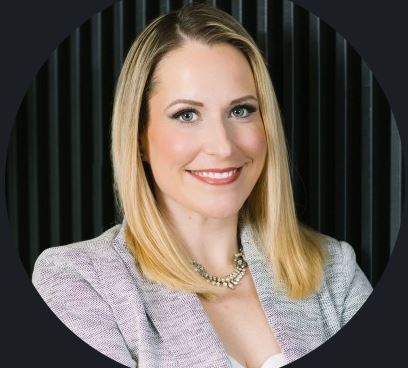
That gap is where people leaders earn their seat. In a recent session of Achieve's AI Innovation for HR Mastermind Series, Desselen Wood, Global Chief People Officer at Syntax, made the case plainly: AI can produce the content, but it can't make anyone care. That part is still yours.
AI in HR has a content problem, not a production problem
For years, a sharp business case, clean analytics, and a well-built deck signaled that you'd done the work. Wood's point is that those signals have been commoditized. When anyone can generate an infographic from a four-line prompt, infographics stop meaning much. She admitted she used to screenshot slides at conferences and posts on LinkedIn. Now she barely looks.
The research backs up the fatigue. A February 2026 Harvard Business Review study found that AI tools didn't reduce work. They intensified it, with employees working faster, taking on more scope, and stretching work into more hours of the day. More output, in other words, isn't the same as more impact. Sometimes it's just more noise competing for the same attention.
Wood's answer is what she calls lived authenticity. Not oversharing, but bringing the real experience that makes content valid: why this matters, what you've seen, why you chose to frame it this way. She used a simple image to make it stick. A sandwich microwaved with cheap cheese and one fried in butter in a pan are both called grilled cheese. Nobody experiences them the same way.
The data-driven decision is a myth worth retiring
Executives love to say they make data-driven decisions. Wood argues there's no such thing, at least not without emotion in the loop. She described research on people whose brain injuries affected emotional processing but left their intelligence intact: they could understand and explain data, yet struggled to decide what to do with it.
That idea has deep roots in neuroscience. Antonio Damasio's somatic marker hypothesis, reviewed by Bechara, Damasio and Damasio in Brain and Cognition, describes how damage to the ventromedial prefrontal cortex disrupts the processing of emotional signals while sparing most basic cognitive functions, and how that impairs decision-making. Facts inform. Feelings move.
"If you don't feel something, you're not going to do something."
Desselen Wood, Global Chief People Officer, Syntax
For HR leadership skills, this reframes the job. A spreadsheet in an inbox is, as Wood's team puts it, "rat-like": flat, no spark. The same output on a clean slide, narrated by someone who explains why it matters, becomes something people remember. Her team's shorthand for that upgrade is to "squirrel this up," because a squirrel is just a rat with good PR.
Do, Feel, Know: a framework for AI for HR leaders
The most practical tool from the session reorders how most of us build a presentation, an email, or a business case. Before you gather content, and before you write a single prompt, answer three questions in order:
- Do: What specific action do I want this person to take?
- Feel: What emotion will drive them to take it?
- Know: What data, stories, or examples will create that feeling?
Only then do you prompt AI to find the information that supports the ask and the emotion. Wood's example: if you want a customer to buy an AI strategy, they need to trust that you understand AI and believe they have a problem today. Everything else is optional. This is where AI in HR becomes genuinely useful. It's fast at finding evidence once you know what you're looking for, and terrible at deciding what matters.
She paired the framework with three disciplines for anything you present. Check that the content is accurate for the story you're telling. Distill it ruthlessly to what will change this particular person's mind (a CFO and a marketing leader care about different things). Then display it with enough human skill that it lands.
What it means for manager effectiveness and meetings
The same logic applies to how teams spend time together. Microsoft's research found that meetings after 8 p.m. are up 16% year over year, and that 48% of employees and 52% of leaders say their work feels chaotic and fragmented. Wood noted that offices once limited meetings by the number of rooms available. Now meeting space is infinite, and attention has paid the price.
Her fix is refreshingly direct: put the "do" in the calendar invite. If a meeting exists to make a decision, say so up front. She traced the habit to a COO who sat through long business cases only to hear the budget request at the end, and who told presenters he would have paid attention if they'd led with it.
There's an AI angle here, too. Gartner found that just 7% of organizations provide guidelines on how to use time saved by AI. If the hours AI frees up simply flow back into more decks and more meetings, nothing changes. Clarity about the ask is one of the simplest places to reinvest them, and it's a skill managers can practice in every meeting they run.
This is the kind of problem the Achieve Leadership Network was built for. People leaders don't need another trend report. They need a room of peers working through what's actually happening in their organizations.
What this looked like in the room
The AI Innovation for HR Mastermind Series is a cameras-on, hands-on lab for HR and employee experience leaders, built around real workflows rather than predictions. In this session, Desselen Wood brought the lens of a global people leader who uses AI daily, and Zech Dahms, President of Achieve, moderated a discussion that moved quickly from ideas to application.
Leaders compared notes on teams automating newsletters and employee updates, and on what happens when AI ends up writing to AI. The group then worked a real presentation live: a participant preparing a talk for an audience of change managers, which Wood helped sharpen into a clear ask, a target emotion, and a "from-to" story that moves an audience from today's frustration to tomorrow's relief. The conversation also took on speed versus latency in teams, and why being back to back isn't the same as moving fast.
Members can watch the full recording and recap in the Achieve resource library.
What this means for HR leaders
AI is changing what earns attention inside organizations, and that makes it a culture and performance issue, not just a tooling one. Three moves stand out:
Lead with the ask. Whether it's a board update or a manager's team meeting, state what you need people to do first. It's the fastest way to cut through an infinite workday.
Use AI for evidence, not volume. Decide the do and the feel before you prompt. Let AI find the proof points, then cut everything that doesn't serve the decision.
Narrate what matters. The most influential people in your organization won't be the ones producing the most content. They'll be the ones who show up, explain why it matters, and connect it to something real. That's what builds trust in culture change and keeps people engaged long enough to act.
"You are the feeling."
Desselen Wood, closing the session
Keep building with peers
The Achieve Leadership Network brings HR and people leaders together to solve what's next, through masterminds like the AI Innovation for HR series, peer exchanges, and practical frameworks you can use the next day. If you want a community that helps you turn AI from noise into an advantage for your people and your organization, we'd love to have you in the room.