Designing Talent Workflows With AI: A Guide for HR Leaders

Designing Talent Workflows With AI: From Conversation to Executive Brief
This week, HR Tech 2026 in Las Vegas put AI agents front and center. Workable shared new data on its AI recruiting agents at the event, and UKG showcased agents for frontline workforce operations. The tools are arriving fast. HR's own adoption isn't keeping pace.
According to SHRM's State of AI in HR 2026 report, 39% of the 1,908 HR professionals surveyed say AI is already adopted in their HR function, and another 7% plan to launch it this year. That's the tension at the center of AI for HR leaders right now: the technology is ready, but most people functions still haven't found their first real use case.
Here's the play. Most HR teams don't need another platform. They need one workflow, built around work they already do, that proves what's possible. That's exactly what talent development leader Kat Cortave walked through in a recent Achieve Leadership Network session, and her approach offers a practical blueprint for any people leader ready to move from curiosity to capability.
Why AI for HR Leaders Starts With Conversations
HR runs on conversations. Succession, development, onboarding, stay interviews: each one usually takes a round or two of discovery before anyone gets to an output they can act on. Succession planning is a clear example. Leaders want to grow talent internally, but few feel ready. DDI's HR Insights Report 2025 found that while 75% of organizations prioritize internal promotion for leadership roles, only 20% of HR leaders have successors ready for critical roles.
Kat's insight was simple. The first succession conversation tends to ask the same questions every time. How urgent is it if this role is vacant tomorrow? Is there a successor who could step in, and how soon? What would stall or break if this person left? If those answers are predictable, they can be gathered up front, and AI can turn them into something an HR leader can walk into the room with.
The Anatomy of a Conversation Brief Workflow
Kat built a five-question automated workflow that produces what she calls a critical role conversation brief. A leader fills out a short form about the role. Minutes later, a formatted brief lands in their inbox with focus areas, hotspots, and the questions worth asking. The first meeting starts with insight instead of discovery.
The build uses tools most HR teams already know: a Google Form to collect answers, a Google Sheet to store them, the automation platform Make to watch for new responses, an OpenAI connection to analyze and synthesize the data against a detailed prompt, and Gmail to deliver the finished brief. Make's free tier covers up to 1,000 credits a month, which has been enough for her workflow so far.
Kat was careful about one point: this isn't a succession plan. It's a better conversation. That distinction keeps humans in the work that requires judgment and relationships, and lets AI handle the synthesis that usually eats up a meeting.
The Barrier to AI in HR Is Awareness, Not Skill
If the build sounds technical, Kat's story is the reassuring part. The first time she opened Make's setup screens, she didn't know what any of the fields meant. So she took screenshots, shared them with ChatGPT, explained what she was building, and asked it to walk her through every field and toggle. When she needed an API key for the first time, she simply said she'd never done it before and asked for step-by-step instructions. Her running prompts throughout: What could go wrong? What am I not thinking of? What would make this even better?
The research suggests that readiness is rarely the real constraint. McKinsey's Superagency in the Workplace research found C-suite leaders estimated that only 4% of employees use gen AI for at least 30% of their daily work, when 13% actually do. Employees are three times more likely to be using it than their leaders expect. And Microsoft's 2026 Work Trend Index reports that 66% of AI users say AI has given them more time for high-value work, while 58% say they're producing work they couldn't have produced a year ago.
The takeaway for HR leadership skills is clear: the capability gap closes fastest when leaders build something themselves, using AI as the coach.
From One Prompt to a Repeatable System
Once teams realize how often they use AI, the next question is what they're doing repeatedly. Kat named a trap many HR teams fall into: the shared prompt library. It works until people copy and paste inconsistently or tweak the wording, and the quality of the output drifts. If you're writing a new prompt every time you run the same process, that's your signal to standardize it into a workflow or reusable tool. Achieve President Zech Dahms added that some AI platforms now let teams package a prompt as a skill and activate it across an organization, so no one needs to carry the full prompt at all.
The same conversation brief pattern travels well beyond succession. In the session, the group mapped it to:
- Development plans aligned to company goals, values, or a career framework
- 30-60-90 day check-ins that support new manager training and onboarding
- One-on-one briefs that combine an employee's weekly priorities with company context
- Stay interviews that strengthen employee retention strategies
- Offsite planning that synthesizes what the team actually wants to discuss
This is where Microsoft's latest research lands too. Its Work Trend Index frames the next advantage as less about adopting AI tools and more about redesigning how work gets done around them. For people leaders, a standardized workflow is that redesign at a scale you can manage.
Building a Culture That's Ready to Experiment
Expectations at the top are clear. SHRM reports that 92% of CHROs in its 2026 CHRO Priorities and Perspectives research anticipate AI will be further integrated into the workforce this year, and 87% expect greater AI adoption within HR processes. Getting there takes room to experiment, and the session offered two practical ideas.
First, find the work worth automating. Zech suggested having a team log how they spend each day for one week, then compare notes. The recurring tasks that surface are your best candidates for a workflow. Second, make experimentation official. Kat described a leader at a past organization who gave each team member a one-week AI sabbatical to explore, build, and report back on what they learned.
"I think the biggest limitation with these tools are the limits that we put on them." Kat Cortave
That mindset shift is where peer communities earn their keep. Ideas like these rarely come from a vendor demo. They come from people leaders comparing notes on what's actually working, which is the heart of how the Achieve Leadership Network operates: solution circles, not therapy circles.
What This Looked Like in the Room
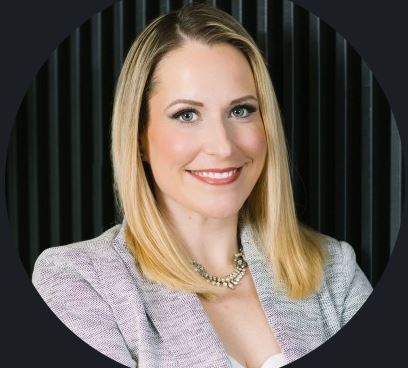
The session, led by Kat Cortave, a talent development leader and certified executive coach, and hosted by Zech Dahms, President of Achieve, was intentionally show-and-tell. Kat opened the hood on her live build, from the form and spreadsheet setup to the prompt structure and the finished brief, and invited members to experience the workflow themselves.
Members brought their own builds and challenges to the table. One shared a daily industry intelligence briefing he built to track workforce, training, and AI headlines. An HR leader in healthcare, working in a cautious environment, described how AI has already helped her team prepare stronger responses in unemployment cases. Together, the group stress-tested where conversation briefs could go next. Members got the full walkthrough and the discussion that followed, and those details stay in the room.
Build Alongside Your Peers
AI for HR leaders doesn't start with a strategy deck or a platform rollout. It starts with one conversation your team has over and over, a standardized way to prepare for it, and a few peers to learn alongside. You're closer than you think.
The Achieve Leadership Network brings people leaders together to solve what's next across culture, performance, and retention through masterclasses, masterminds, and member-only sessions like this one. If you're ready to build alongside builders of a better world of work, learn more about joining the Achieve Leadership Network