Achieve CPR LIVE in San Francisco: Employee Retention Strategies: A Culture Worth Staying For

achieveCPR LIVE in San Francisco: Building a Culture Worth Staying For
Some companies are learning the hard way what they lost when they let people go. A new SHL survey of 2,036 workers in the US and UK found that 16% had been replaced by AI and later asked to return by the same employer, rising to 19% in the US. Before going back, 51% would want a significant pay rise and 40% would want full transparency on how AI would be used in their role. For anyone building employee retention strategies right now, the lesson is clear: how you treat people, and how honestly you talk to them, shapes whether they stay or come back.
Meanwhile, most employees aren't going anywhere, and that isn't necessarily good news. MetLife's 2026 Employee Benefit Trends Study found that 77% of employees intend to stay with their current employer, but 56% are staying out of necessity rather than genuine commitment. Indeed Hiring Lab's analysis of federal JOLTS data describes a persistent "low-hire/low-fire" market, with the quits rate at or below 2% for seven consecutive months.
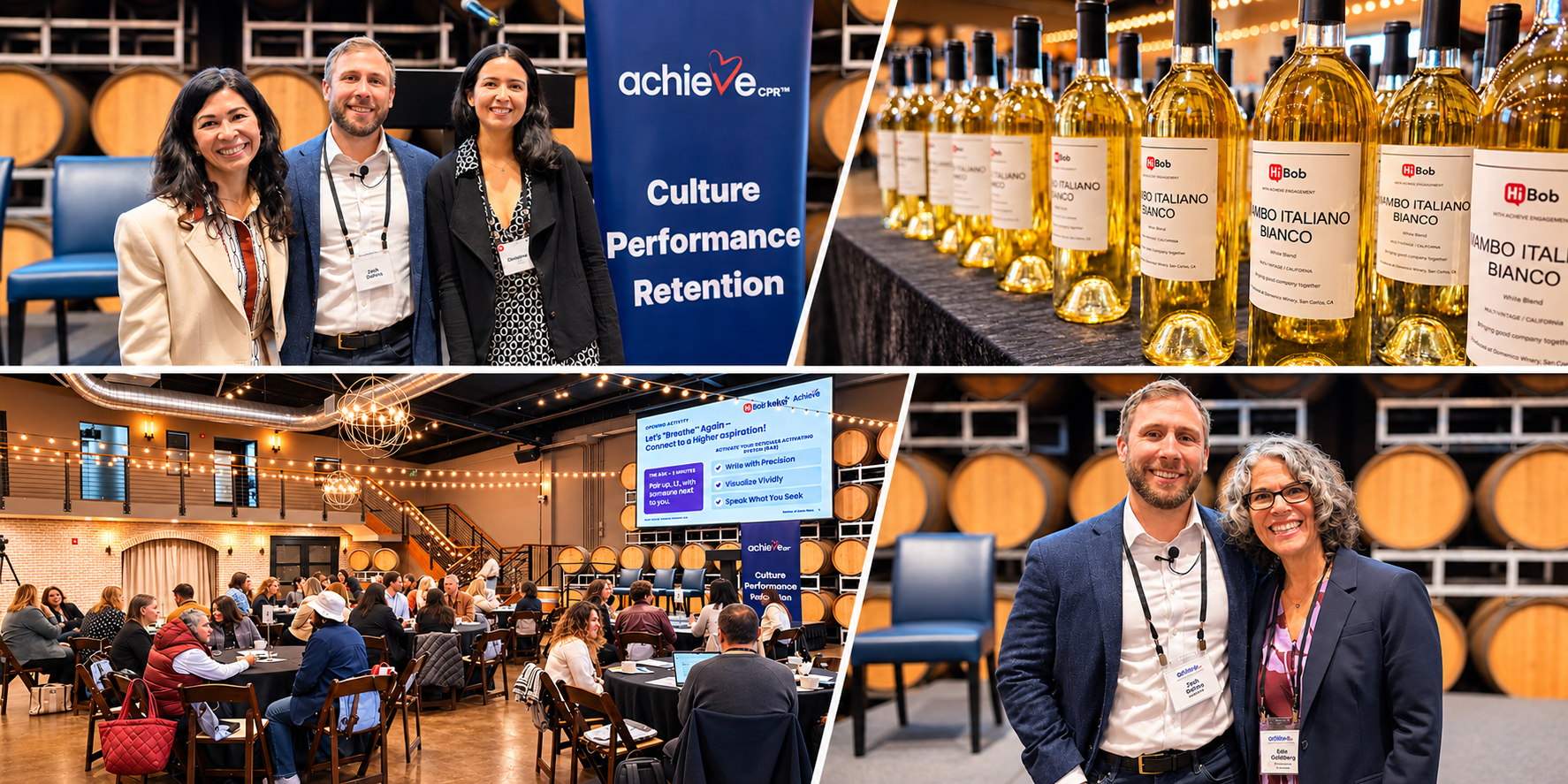
Low turnover can look like a win. It often isn't. That tension sat at the center of the Culture + Retention panel at achieveCPR LIVE in San Francisco, where Gianna Driver, Chief People Officer at One Workplace, and Sorayah Surkatty, People & Culture Partner at HiBob, joined Zech Dahms, President of Achieve. Their shared starting point: retention isn't a program. It's an outcome.
Rethinking Employee Retention Strategies: Why "Retain at All Costs" Fails
Driver opened with a challenge many leaders will recognize. Organizations are fixated on "retain, retain, retain," but a 100% retention rate isn't the right metric in a world this dynamic. The real question is whether you're retaining the right talent, and the right talent isn't static. It changes as companies grow, go public, or get acquired.
That matters more in a job-hugging market. When people stay because leaving feels too risky, high retention can hide disengagement. During the session, keynote speaker Edie Goldberg asked the panel how they keep people from "retiring in place" when the market makes leaving so hard. Driver's broader approach starts with honest conversations: understand what each person wants from their work, and if the company can't offer it, make it safe to talk about whether this is still the right place. She called that a sign of a culture with psychological safety, one that's human first rather than purely results driven.
MetLife's data suggests why human first pays off. Employees who feel connected at work (seen, valued, and supported) are two times more likely to be engaged and three times more likely to stay because they want to, not because they need to.
Career Architecture: Show People a Future Inside
If people can't see a path forward, they'll look for one elsewhere, even in a slow market. SHL's research found that 66% of workers believe they would need to leave their current employer to advance their career. Only 42% say their manager fully understands their skills beyond their current role, and 31% cite managers not wanting to lose good people as a main barrier to moving internally.
The panel pointed to a better model. Zech raised IKEA as an example of retention in the AI era, and the reporting backs it up. Ingka Group, IKEA's largest franchise operator, told Reuters it had trained 8,500 call center workers as interior design advisers since 2021, while its AI bot Billie handled 47% of customer queries to call centers. According to Retail Week, Ingka's remote interior design channel brought in €1.3 billion, or 3.3% of revenue, in its 2022 financial year. Surkatty called it repurposing: looking at the skills you already have and asking where else they can create value.
AI Employee Engagement Starts With Honest Communication
AI is now part of every retention conversation. Zech framed the stakes plainly: some leaders see AI as a savior, while some employees see it as the thing that will eliminate them. Surkatty's first rule is to address what you don't know. Leaders often avoid topics they can't yet answer, but naming the elephant in the room is central to psychological safety, and silence creates distrust immediately. Zech added that if leaders don't drive a proactive internal narrative, the societal one (AI doomsday, everyone replaced) fills the gap.
Driver shared how her CEO handled it at an all-hands. The headlines are about doing more with less. One Workplace wants to use AI to do more with the same. The company is building basic AI literacy for everyone through peer-led lunch and learns, and it's upfront that it doesn't have every answer. Surkatty added that HiBob is defining what "AI skills" actually means in hiring and making sure non-technical employees get the same chance to build them as engineers and product managers.
Then there's repetition. Surkatty borrows the marketing "rule of 27": people need exposure to an idea 27 times before it sticks. Every initiative she launches gets a multimodal communication plan (Slack, email, swag, stickers) repeated until employees can say it back. As a CHRO in the Achieve network once told Zech, if you're not annoyed by how often you've said it, you haven't said it enough.
Manager Effectiveness Is the Retention Lever
Both panelists returned to the same answer: managers. At One Workplace, HR business partners coach managers while the learning and development team builds the content, so managers can spot disengagement and gently hold people accountable without shaming or blaming. "It's boots on the ground," Driver said, not the executive team talking about it at an all-hands. She also encouraged leaders to expect at least quarterly check-ins with individuals and teams, light on administration and focused on what's known, what isn't, and what to explore together.
Surkatty was direct: not every manager should be a manager. When a manager says someone isn't performing, she asks how the feedback is being given. Is it documented, verbal, or an off-the-cuff Slack message? And if it hasn't worked, what will you try differently?
Driver also turned the lens on HR itself. Drawing on Patrick Lencioni's idea of artificial harmony, she realized her own people team needed the same work it was asking of the business. The team held an offsite, nicknamed Peoplechella, focused on trust and healthy conflict using real scenarios. Her advice: look inward, then take the work outward.
This is the kind of challenge members of the Achieve Leadership Network work through together: comparing how they're equipping managers, redesigning career paths, and communicating through AI change, rather than figuring it out alone.
Belonging and Recognition Over Perks
"Pay is the entry fee, but it's not a differentiator," Surkatty said. Early in her career, working in a hypergrowth company, the book Art of Community showed her that retention has many levers beyond compensation: community, clarity, and knowing where you belong. A strong employee recognition program, real social connection, and clear communication between teams all build those pockets of community. Predictability and communication, she noted, cost very little.
HiBob puts this into words with every new hire: "We're glad you're here." At a time when people are questioning their relevance as new technology arrives, Zech noted, that kind of plain affirmation goes a long way.
What This Looked Like in the Room
The panel was part of achieveCPR LIVE San Francisco, a half-day executive experience for senior HR and People leaders built around Achieve's Culture, Performance and Retention framework. It followed Edie Goldberg's keynote on performance enablement and led into a peer exchange where leaders worked on their own retention challenges.
The room didn't stay quiet. One attendee described team members admitting they "polish" problems rather than resolve them. Another pushed Driver on her call to slow down despite pressure from boards and shareholders, which sparked a candid exchange about change happening with people, not to them, and a memorable metaphor about F1 cars still needing pit stops.
What This Means for HR Leaders
Driver described Culture, Performance and Retention as a circle rather than a pyramid. A clear culture attracts the right people and repels the wrong ones. That culture drives performance. And when performance is measured as progress, it feeds back into retaining the right people. Zech added the long view: it's easy to crush one quarter, but sustaining performance for years depends on keeping healthy, engaged people.
The most effective employee retention strategies right now aren't perks. They're honest conversations about fit, visible career paths, managers equipped to coach, and communication repeated until it's trusted. Build those, and people stay because they want to.
Keep Building With Peers
Retention problems rarely have off-the-shelf answers, and the best ideas often come from leaders a step ahead of you. The Achieve Leadership Network brings HR and People leaders together through masterclasses, masterminds and member-only events to solve challenges like this one with collective intelligence.
Learn more about the Achieve Leadership Network and join the community